Many retailers recognize the situation. A family enters the store, but after just a few minutes the children become bored. They start climbing on clothing racks, opening packages, running through the store, playing hide-and-seek between the aisles, touching products or crying and shouting. Meanwhile, parents are busy trying to keep their children occupied, leaving them with less attention for the products or the advice of store staff.
As a result, many parents decide to end their shopping trip earlier than planned. Not because they have seen everything, but because they want to prevent further disruption. This creates a less enjoyable shopping experience for families, other customers and store employees.
Why do children get bored while shopping?
According to research by Deli-Gray et al. (2014), many retail stores still pay too little attention to children's shopping experience. The focus is mainly on adult customers, while children are often given little opportunity to engage or entertain themselves. As a result, boredom develops more quickly, leading to restless behaviour during the shopping trip.
Research by Prosmans (2021) at Hasselt University confirms these findings. The master's thesis explains that young children are still often seen as a distraction during shopping or are simply kept occupied rather than being involved in the shopping experience itself.
But what if that restlessness could easily be prevented?
The research mentioned above shows that actively involving children in the shopping experience makes the visit more enjoyable for the entire family. A well-designed play corner proves to be one of the most effective ways to reduce disruption in stores.
A play corner increases customer satisfaction by keeping children entertained while parents can shop in a relaxed way. Research shows this can lead to longer dwell times, a more positive shopping experience and stronger engagement with the brand.
In addition, figures from Statistics Netherlands (CBS) show that consumers are shopping online more frequently than ever. This makes the in-store experience increasingly important. A physical store must offer something an online shop cannot: personal advice, the opportunity to experience products firsthand and a pleasant environment for the whole family. A play corner contributes to this by entertaining children, giving parents peace of mind and making the shopping experience more enjoyable.
What happens when a store offers a play corner?
Research shows that a play corner can contribute to:
- Longer dwell times for families.
- More relaxed shopping for parents.
- More time for staff to advise customers.
- A more positive shopping experience.
- A stronger emotional connection with the brand.
According to Deli-Gray et al. (2014), longer dwell times may also have a positive impact on sales.
An effective play corner is more than a table with a few toys
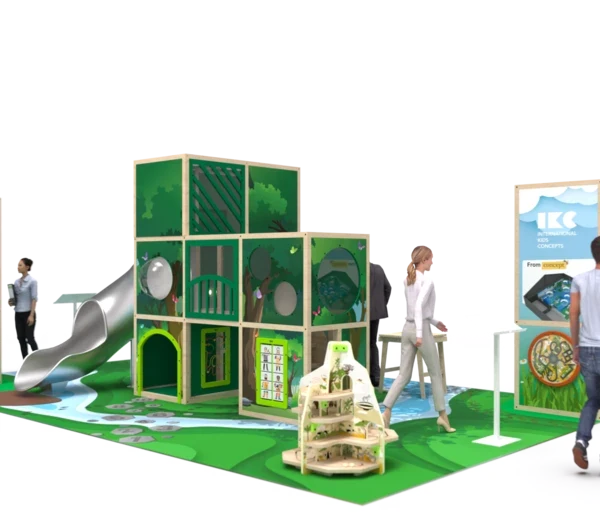
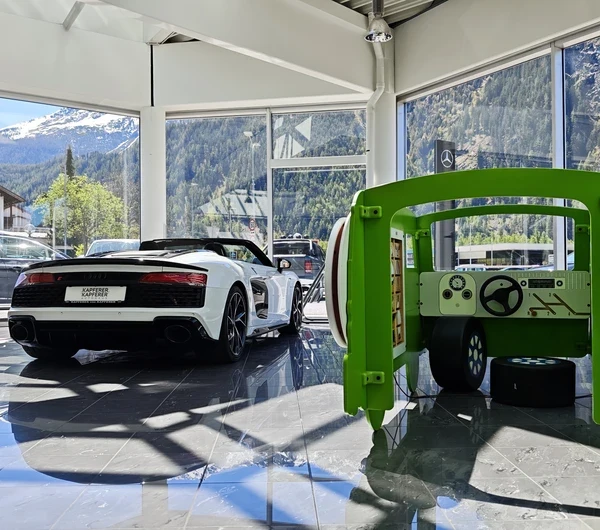
The greatest impact is achieved with a play environment that is safe and easy to supervise, appeals to children of different ages, includes educational play elements and fits seamlessly with the store's branding and interior. It is equally important that parents can easily keep an eye on their children while shopping.
Why are more retailers investing in a play corner?
Retailers increasingly see a play corner as an investment in the customer experience rather than simply an extra facility.
A well-designed play area contributes to higher customer satisfaction, encourages families to stay longer and helps create a more welcoming, family-friendly shopping environment.
How does IKC help retailers?
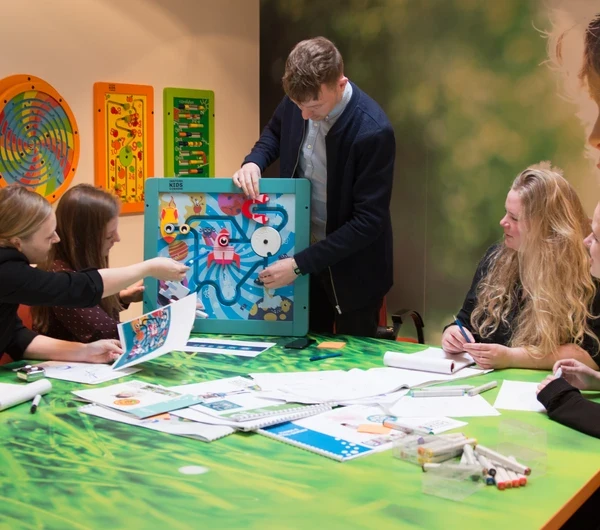
For more than 20 years, IKC has been designing play environments for retailers, showrooms and shopping centres around the world. Our bespoke play concepts combine safety, durability and educational play. From compact play corners to interactive play systems, every solution is tailored to the available space, target audience and identity of the store.
Would you like to discover how a play corner can increase customer satisfaction in your store?
View our retail projects.
Sources
Deli-Gray, Z. et al. (2014). Research into children's entertainment in retail environments and its influence on the shopping experience, dwell time and sales.
Prosmans, F. (2021). How can young children become actively involved in shopping activities in children's clothing stores? Master's thesis, Hasselt University.
Statistics Netherlands (CBS). Digitalisation and Knowledge Economy (latest edition).