Creating a play area in a store, waiting room, healthcare facility, restaurant or other public environment may seem simple. Add a few games, some toys and an empty corner, and children can start playing. Right?
In practice, there is more to consider. A good play area should not only be appealing to children, but also practical for the organisation. Think about the available space, cleaning, maintenance, supervision and intensive daily use.
What are common mistakes when creating a play area?
Four important points to consider are: assuming you need a lot of space, creating a play area that requires a great deal of supervision, choosing materials that are difficult to clean, and using too many loose toys.
1. Thinking you need a lot of space for a play area
A common misconception is that a good children’s play area requires a lot of square metres. As a result, smaller spaces are sometimes left unused.
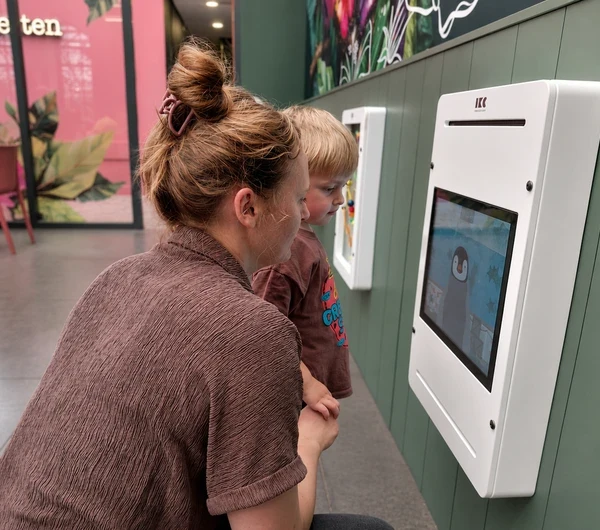
Even in a limited area, it is possible to create an attractive play space. For example, interactive wall games or compact play elements can be mounted directly onto the wall. This allows you to make use of both the floor area and the available wall space.
2. Designing a play area that requires constant staff supervision
A play area is intended to give children their own space to play. If staff constantly need to explain games, tidy up toys or supervise children, the play area can create extra work instead.
That is why it is important to consider independent play when designing the space.
Play elements should be easy for children to understand and use without staff having to help all the time. The layout of the space also matters. An open and clear design makes it easier for parents and caregivers to stay nearby and keep an eye on the play area.
3. Choosing materials that are difficult to clean
Children touch many different surfaces while they play. Especially in locations that welcome many families every day, it is important to consider cleaning and maintenance from the start.
Materials and play elements with easy-to-clean surfaces make daily maintenance much more practical.
4. Using too many loose toys
Loose toys may seem like an easy way to furnish a play area, but in a professional environment they can also have disadvantages.
Parts can be moved, lost or end up outside the play area. In addition, toys need to be collected and tidied away regularly. With intensive daily use, this can take up unnecessary staff time.
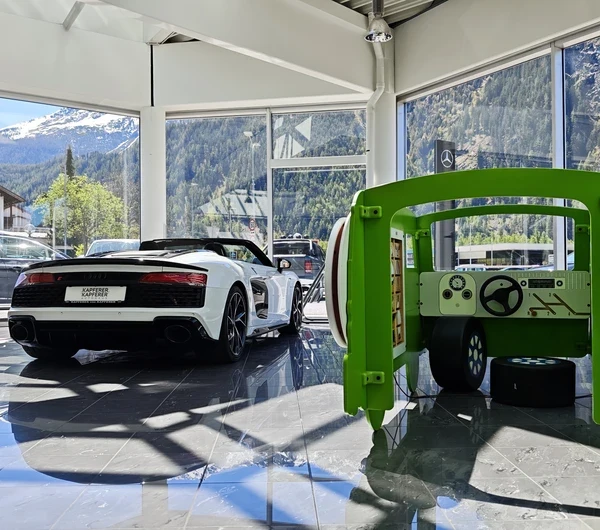
That is why we use fixed play elements. These include wall games, interactive games and other play products that remain in a fixed position.
This keeps the play area organised and reduces the number of loose parts that need to be tidied away or found again. Especially in busy locations, this can make the day-to-day management of a play area much easier.
Creating a play area for your organisation?
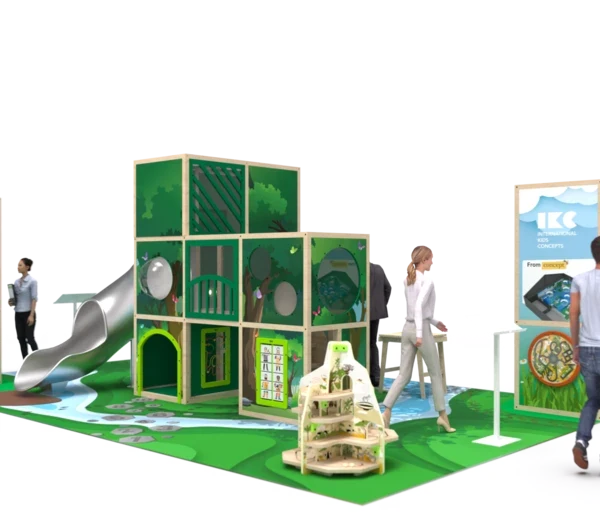
Every location is different. Sometimes only a small wall or corner is available, while another location may have enough space for a fully themed play environment.
IKC develops professional play concepts that can be adapted to the available space, target group, interior and brand identity of a location. From a compact play solution starting at approximately 1 m² to a complete play environment.
Curious to see what is possible at your location?
View our brochures for examples of play solutions for different spaces and industries.